
Hydrogen sulfide (H2S) is a toxic and corrosive contaminant found in Natural Gas.Even at low parts per million (ppm) levels, H2S corrodes pipelines, processing equipment and storage infrastructure, leading to severe operational challenges and noncompliance with regulations. Precise concentration monitoring is therefore essential to safeguard personnel, prevent equipment degradation, and uphold product quality standards. As regulatory frameworks tighten and the push for cleaner energy intensifies, monitoring H2S levels has become critical to mitigating environmental risks, maintaining operational integrity, and strictly adhering to evolving safety protocols. However, the broad variability and compositional complexity of these gas matrices present a substantial challenge to reliably and selectively measuring H2S.
Advantages of TDLAS with a Multipass Cell
Pipeline tariffs in North America typically cap H2S at 4 ppm, and European grid specifications are similarly strict. Verifying compliance requires reliably measuring single-digit ppm of a gas whose composition changes from one delivery to the next. TunableDiode Laser Absorption Spectroscopy (TDLAS) is capable of measuring H2S with the
required sensitivity.
There are two things that make that difficult. First, H2S absorption is relatively weak. Second, hydrocarbons absorb in the same spectral region, which creates interference with the H2S absorption lines.
- See more
- See more
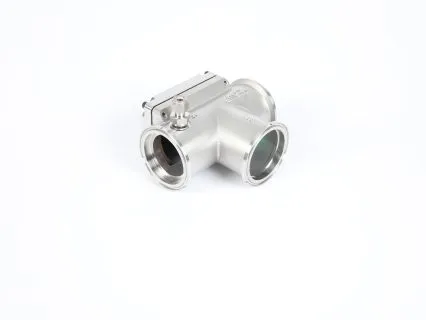
Accessories
T-Flange
See more →- Two analyzers on a single flange
- Configurable setup with high flexibility
- Low installation costs, low purge requirements
- See more
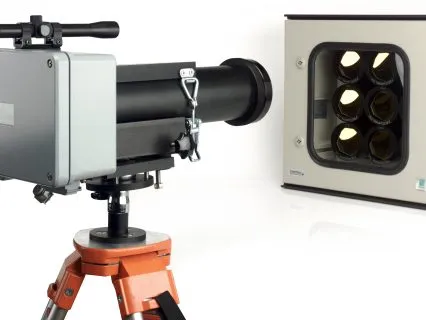
Gas Analyzers
LaserGas™ II OP
See more →- Very low detection limits
- Wide range of detectable gases
- Suitable for hazardous areas